|
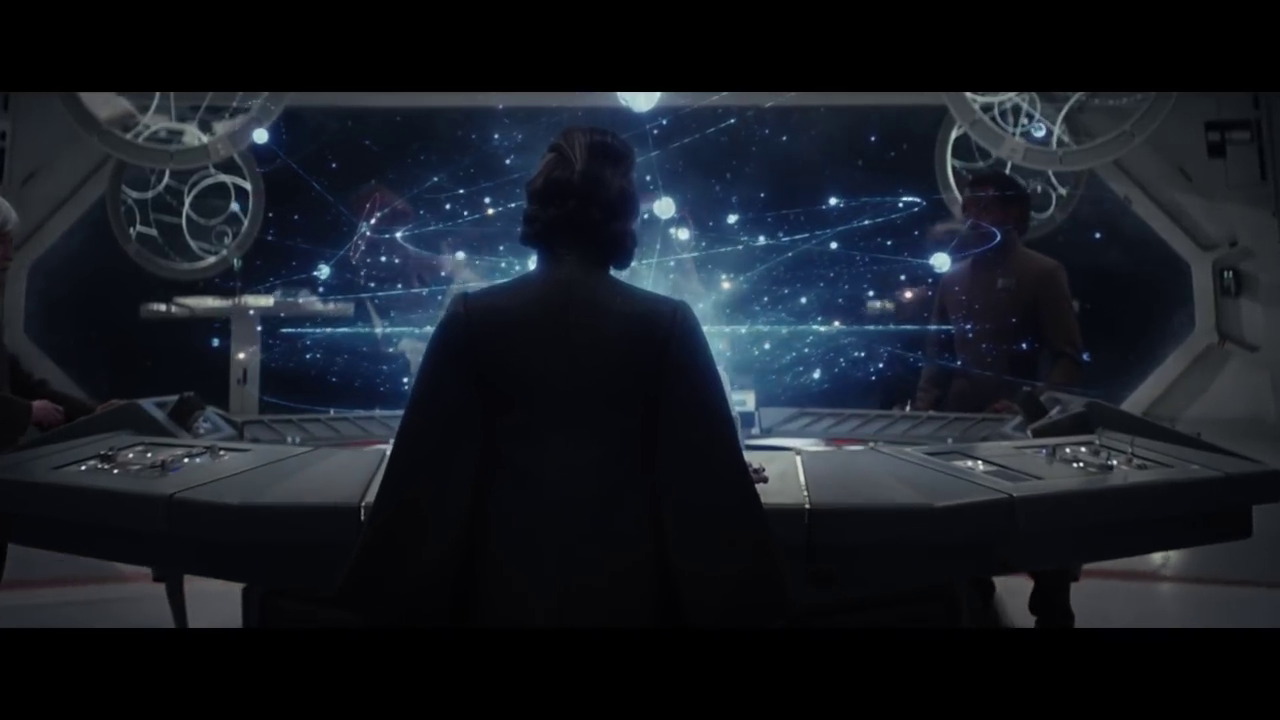
| Do the Caretakers keep his hand working? |
The aftermath of the release of Star Wars Episode VIII: The Last Jedi must be one of the most brisk
turnarounds in recent film franchise history. In less than a week the received
wisdom on the internet went from the by now utterly routine claim that the film
was one of the strongest instalments in the series since The Empire Strikes Back, to such a judgement's nemesis figure,
namely that it was a complete disaster, a franchise-killer on a scale
equivalent to Supreme Leader Snoke's flagship relative to the mere dreadnoughts
of the Prequels. It feels almost pointless to rehash the arguments being made
online, especially about the film's structure, pacing, narrative choices and
humour, although I'll still look into them for the benefit of any reader who
only spends a healthy amount of time on the internet. To start without,
however, I wish to contextualise the process of responding to The Last Jedi in regards to my own
experience.
 |
| "The cave's collapsing!" |
Before I saw The Last
Jedi, I'd for some reason gotten it into my head that I more or less knew
what was going to happen. Luke would be a wise old man who trained Rey to be a
powerful Jedi, perhaps after a little reluctance; she'd probably need to prove
herself worthy of some great secret discovered by Luke on the Ahch-To island.
Leia would send Finn and Poe on some arbitrary mission to fight the First
Order, which would provide us with most of our mid-film action. At the end,
Luke and Rey would return and fight Snoke and Kylo Ren. Luke might get killed
by Snoke, or perhaps he and Rey would be unsuccessful, but would escape and
decide that, in order to truly destroy these dark force users, they needed to
give rebuilding the Jedi Order another go.
 |
| The salt planet of Noth. |
I don't really know why I assumed that this is what would
happen. Perhaps it seemed like the single logical direction in which the film
could go after the end of
The Force
Awakens, which seemed to leave Rian Johnson in a position in which he had
to produce a "Luke trains Rey, Finn and Poe carry on with the
Resistance" story that I imagined could only go one way, particularly
based on the limited amount of leaks I'd heard about or seen by accident.
Nonetheless, I felt almost as if I'd already seen the film, and that the
viewing would merely fill in the details for the sketch I'd already produced in
my head.
 |
Clicking 'comments' on any social media
post about this film. |
Perhaps this partially explains the sense of bafflement I
experienced the first time I watched The
Last Jedi, which saw me emerging from the cinema at the end of the screen
head in hands and feeling absolutely bewildered, considering that what I'd just
watched bordered upon being a Prequel-level mess. I went to bed that night
exasperated and woke up pained, with a cinematic bad taste in my mouth. And if
you think I was taking this trash about space knights hitting each other with glowsticks
a bit seriously you'd be right, but at least I can take some comfort in the
fact that an annoying Star Wars film was the biggest of my troubles. It was
only as the film continued to revolve in my head, like black uniforms in a
First Order washing machine, that I started to remember more and more how
satisfying many parts of the film had been: Luke's discussions with Rey about
the Force and the Jedi; Rey and Kylo Ren's telepathic conversations; Rey's
confrontation with Snoke; Luke's confrontation with Kylo. I'd known from the
start that I would almost certainly see the film again, simply because it was a
Star Wars film (although I didn't with Rogue One), and I became increasingly eager to do so. I knew that for every
sequence of Finn and Rose in a casino, or Poe being an insubordinate idiot, or
Maz Kanata, I was going to get Rey in the cave, or Kylo killing Snoke, or Luke
facing down the entire First Order.
 |
| "You must be swift as a coursing river..." |
As a result, upon second viewing, I thoroughly enjoyed The Last Jedi, embracing its strongest
scenes, taking its humour as it came and tolerating alien horse racing in the
knowledge that we'd be back to Luke, Rey and Kylo soon enough. When the credits
came I was full of good cheer, and over the next few days I was replaying
scenes in my head, anticipating a third viewing or the eventual blu-ray
release, and looking at myself in the bathroom mirror at work and saying,
"I will not be the last
Jedi." Knowing when the film would go astray allowed me to focus more on
when the film succeeded, and I find myself thinking, right now at least, that The Last Jedi is the best of the
Disney-era Star Wars films. That's not to say that the film isn't flawed, because it is,
significantly, but what it does well it accomplishes with such aplomb that the
problems pale into drastically reduced significance. Yet the reaction the film
is receiving suggests that many do not share this attitude. I might touch upon
the reaction as I discuss the film, but in general my view is that to
completely dismiss the film as some kind of failure is to do oneself a disservice
in overlooking how the film succeeds.
Narrative Structure and Pacing
 |
At least one of these didn't conveniently
appear to separate Luke and Kylo. |
As I've already discussed in my first impressions post, the
major weakness of
The Last Jedi is in
its structure. Simply put, its secondary plot is too far removed from its
primary, and is too slow and clumsy in establishing its contribution to the
shared ideas which coalesce in the film's finale. Perhaps it's personal to me,
because my favourite character in the Original Trilogy is Luke, and my
favourite new character is Rey, but I wasn't sufficiently interested in Finn
and Poe to not find their extended storyline distracting. While I found Finn
somewhat annoying in
The Force Awakens,
I think John Boyega's performance was fine with the role he was given, and I
liked Oscar Isaac's, smaller though it admittedly was. I was perfectly happy to
see the characters in this, but I think the film devotes more time to them than
is necessary. In a sense this problem largely arises because the Rey-Luke-Kylo
narrative is so interesting that everything else seems irrelevant by
comparison. Yet the issue also emerges from the contrived and clumsy nature of
the secondary plot.
 |
Why didn't the Falcon cause as much pants-
wetting from fans this time around? |
My view was that an extended, slow-motion chase between the
First Order fleet and that of the Resistance lacked any tension. It could have
gone for a sense of dread, but the characters amble about so casually and
everything carries on so normally, with so little apparent anxiety on the part
of the characters, that it's hard to see it. Even Poe, the most frustrated
character in this narrative, only seems mildly impatient most of the time.
Furthermore, sending Finn and Rose to another planet in the midst of this
sequence flattens any suspense even further, as despite warnings on Rose's part
the characters simply feel like they have time to spare, time for Finn to run
around the casino looking amazed, time to dismiss an offer of help from a
fellow prison inmate and time to gently remove the saddle from an alien horse
after a fairly long chase. It just occurred to me that the film has a chase
within a chase, which enfeebles the larger chase further still. This storyline also involves the entirely arbitrary insertion of Maz Kanata, a character I greatly disliked in
The Force Awakens, who seems to be Skypeing Finn, Poe and Rose despite being in the middle of a firefight; is a floating camera following her around? She seems to only be in the film because her actress was contracted to be, or something similar.
 |
| You can convert your gold to Muggle money here. |
Ultimately the Canto Bight sequence is intended to flesh out
the film's theme of democratisation, as well as the related progression of
Finn's character development, and the reason it suffers is because that entire
side of the plot is misconceived. There's no need for the fleet chase to
happen, which is the excuse for Finn and Rose going to a casino. The tension
could have been served perfectly well, perhaps better, if the Resistance had spent
much of the film in the bunker waiting for the First Order to arrive, rather
than hurrying there in the finale. The concept of rebellion and democracy could
similarly have been established if the bunker had been occupied by some
oppressive party upon the Resistance's arrival, perhaps one which offered to
let them use the facility; would the Resistance be willing to weaken themselves
further before the First Order's arrival by fighting to free the occupier's
slaves? I'm hypothesising wildly, and I'm no screenwriter, but I feel like if
this element was needed it could have been handled more elegantly. It would
also have eliminated the sequence involving Finn and Rose infiltrating the
flagship. This part felt, in my view, simultaneously rushed and protracted. At
first Finn, Rose and DJ seem to acquire uniforms and find where they need to go
with bewildering rapidity, but when they're caught and facing execution their
sentences seem to be interminably delayed.
 |
"He must have thought I was dead!
Good thing I wasn't!" |
The primary narrative, featuring Rey, Luke and Kylo Ren, is
engrossing by contrast, and only suffers in that it must share time with its
counterpart. Indeed, at times Johnson almost appears to choose to cut away from
this plot needlessly, and while this might have been intended to create a
feeling of anticipation and excitement, it can instead make the secondary plot
feel tedious and frustrating. Nonetheless, the "Jedi story", as it
were, is the film's ongoing highlight. Rey arrives at Ahch-To seeking hope and
answers, yet in the end Luke needs to find these from her. We learn more about
Kylo Ren's attitude and the experiences which shaped him, yet with this empathy
we discover that he is only being driven further and further into the darkness.
Finally, we see how Luke has changed, his recovery and ultimately his victory
over himself and his own weaknesses. We see enough of these elements, but in a
differently-structured film I feel that they could have been explored a touch
further and been just a mite more satisfying, to the creation of what would
overall be a more effective whole. It's worth emphasising that despite
structure and pacing being a prominent shortcoming of the film, and one which
naturally affects other parts, it does not eliminate how successful the film's
achievements are.
 |
| Just get R2-D2 to use his fire extinguisher. |
If anything,
The Last
Jedi's construction as a narrative is most comparable not to
The Empire Strikes Back but rather to
Return of the Jedi, in that both texts
feature a strong narrative for certain protagonists and antagonists, and an
arguably distracting secondary plot which exists to a certain degree to give
the remaining protagonists something to do. The question, however, is not
really whether the Ewoks or Canto Bight are more annoying, but rather whether
their respective sequences feel necessary to the plot, and I can't help but
feel that needing to find an unrelated codebreaker to get aboard Snoke's ship
is a more clunky plot development than needing to disable a shield generator
specifically built to protect the Death Star. Both elements do inform the other
plot; the Ewoks demonstrate the folly of underestimating an opponent, while
Canto Bight addresses the concept of freedom. I do, however, feel that the
Return of the Jedi plot is a more
functional secondary narrative.
Direction and Cinematography
 |
| Where was this on the island anyway? |
Now I'm not a filmmaker, and to call my knowledge of
direction, cinematography and editing superficial would be an understatement.
Nonetheless, it's clear even to my untrained eye that Johnson knowns how to
derive a strong performance from his actors, and that he probably lets the
characters emerge in the performances as well. The film is also photographed
very coherently, especially in the use of establishing shots and high or wide
approaches with depth that give us insight into the positioning of characters
in their environment. Of course, in special effects-laden films it's not always
possible to convey complete clarity, and The
Last Jedi has the same visual shortcomings all Star Wars films do in
struggling to convey where characters are inside vast battleships and space stations.
The only other major points of visual weakness which occur to me are some
slightly awkward cutting which left me a little confused as to the location of
the tree on the Ahch-To island, and some effects shots in which I found the
size, arrangement and composition of the Resistance fleet a tad unclear, as
well as some inevitably artificial-looking moments in the Canto Bight escape.
 |
| Instant migraine. |
On the other hand, as with all of the film's other
strengths, when the film succeeds visually it does so in masterful fashion.
This is particularly evident in the scenes in which Rey and Kylo Ren
communicate telepathically, which are so effortlessly clear in what they convey
that they almost require special attention to notice the deftness of touch
found in them, so natural is the framing and editing. The film eschews the
pastiche which dominated
The Force
Awakens and achieves its own visual style with the use of shots I've
previously mentioned, in addition to some other interesting pieces of
filmmaking, such as an extreme close up early in the film, the use of
reflection and the use of low angles to enhance vigorous moments particularly.
This makes sequences such as Rey's lightsaber practice, Luke's giant spear
fishing and Rey and Kylo's battle with Snoke's Praetorian Guard memorable and
distinctive. The reshooting of scenes through flashback to contrast Luke and
Kylo's conflicting stories of their confrontation at the Training Temple also
creates a structure in which the audience visually engages with the
storytelling, as well as contrasting the traditional style which was almost
always firmly in the present action.
The
Force Awakens and
The Last Jedi
are both films shot in a generally engaging manner, but
The Last Jedi is almost certainly the most interesting of the
Disney films thus far, including the shock-and-awe disaster-movie shooting
style of
Rogue One.
Effects and Design
 |
| Cross-sections ahoy. |
This is an area I probably understand even less, but in
these computer-enhanced action blockbusters they have to be addressed. In
general, the practical effects and digital effects succeed in that they are
difficult to distinguish from each other. I do think this looked somewhat
better than some of the effects in The
Force Awakens, although this may partially be due to kind of action
presented. As I've said, the alien horse riding at times looks a little fake,
and so do some of the scenes of them crashing through walls, as well as ships
blowing up. The scenes of BB-8 controlling an AT-ST feel rather hollow also. Some
of Poe's X-Wing manoeuvres defy belief to an extent, but they're tolerable. In
general, as has been said before, there's little achievement in effects anymore
unless practical effects receive more the renaissance they could have with
today's technology, and effects are not where this film's strengths lie.
 |
| Nah. |
Design-wise, while much of the film relies on the
established look of The Force Awakens,
itself drawing heavily upon the Original Trilogy, it does have a few new things
to do. Canto Bight and its inhabitants remind one of the Prequels somewhat, so
it's perhaps for the best that they are only a few scenes and not the entire
film. The Resistance bombers are a design which fits well with days gone by.
Outside the casino, my greatest objection would probably be to the First Order
vehicles with which we are presented. The new AT-M6 walkers to me just look
pointlessly overdesigned, and the look of the Dreadnought is unmemorable, as is
Kylo Ren's TIE fighter. Snoke's flagship is a little better, but its absurd
size somewhat stretches credulity in the same manner as the Starkiller. It
seems implausible that an organisation still recovering its old Empire can
produce such excessive weapons. One of the more shameful design choices is the
use of glossy red armour for Snoke's Praetorian Guard; why would they so
closely evoke the Emperor's guards except to reference the Original Trilogy?
It's a design choice which only seems to make sense outside the confines of the
narrative. The creature designs were heavily marketed in the leadup to the
film, especially the Porgs, but personally I found the Caretakers to be the
most effective new design. The alien horse things, and crystal fox things, are
not especially memorable.
 |
The shield will be down in moments.
You may start your landing. |
This is something I very rarely touch upon, but one area in
which the film shines is in the costuming. Kylo Ren's new outfit, and the
attire Rey dons for her confrontation with him and Snoke, are striking
ensembles. Luke's mixture of costumes reflects his highly varying roles, while
Leia's garb provides Carrie Fisher's final performance with gravitas and
dignity. Even Snoke's flashy gold robe reflects his role in the story well as
an individual who thinks more highly of himself than he deserves. To be utterly
cliché, clothes maketh the man, and in The
Last Jedi they're a point in the film's favour especially in terms of how
they reinforce the film's stronger narrative. Note that Poe, Finn and Rose's
textbook Resistance duds are nothing particularly appealing, although the
officer's uniform, replete with massive jodhpurs, Finn is wearing during his
brief stoush with Phasma gives him a certain distinctiveness in an otherwise
inconsequential scene.
 |
I like to think that Chewie still
ate the one he cooked. |
Screenplay and Humour
Like the rest of the film, the screenplay is a mixture of
stronger and weaker elements. A number of commenters have objected to the
amount of humour in the film, especially arguing that it deflates tension and
makes it difficult to take the story seriously at points. I certainly think
there are times when the humour is unsuccessful, although the main one which
comes to mind is most of Poe's interaction with Hux at the start of the film. I
did get a chuckle out of a few points, like Luke tickling Rey's hand, Kylo's
bemused look at Hux repeating his orders and DJ's dismissive,
"Maybe," when his attitude is challenged by Finn. Leia telling C-3PO
to stop looking nervous is amusing too. From a more visual standpoint, the
Caretakers are kind of amusing, and the Porgs clearly just fodder for the kids,
but they feel like natural enough insertions without getting in the way. The
humour is one of those elements which has the most impact upon first viewing,
and falls away somewhat subsequently. It bothered me somewhat the first time,
but I didn't really mind it the second.
 |
| Let's dance. |
At times I do think other lines can be clunky or seem
inadequately reviewed. For instance, both Poe and Lieutenant Connix say
"Punch it," only a minute or two apart. Both Rey and Rose accuse
someone of being a "Snake" later in the film. There's perhaps an
overuse of the word "scum" as well. I found Rey's question to Luke,
"Did you try to murder him?" possibly unavoidably clunky due to its
cadence and the specificity of the language given the heat of the moment; why
wouldn't she just say "kill" unless it was meant to reflect her
struggle to say it earlier? I'd also argue that if Rey has any issue with this
she doesn't seem to feel any remorse about killing the Praetorian Guards later
in the film, regardless of the situation being one of survival.
 |
| Why no crappy video game for the Sequels? |
The rest of the script, in my view, was solid and serviceable,
with some notable highlights particularly from Luke and Kylo. Kylo's thoughts
on the past, and Luke's on himself, the Force and the Jedi are
thought-provokingly articulated and lend the serious moments the weight they
deserve. A couple of other noteworthy lines might include Finn calling Phasma
"Chrome Dome", which evokes "Goldenrod" in reference to
C-3PO, and Yoda's "We are what they grow beyond." Although I'm sure
there were numerous stipulations, allowing Johnson to both direct and write
gave the film a unified voice and vision, and as with everything else, when it
succeeds it does so highly.
Characterisation and Character Development
Rey
 |
| Does Rey even know what an ocean is? |
Of the new protagonists of the Sequel Trilogy, I found Rey
to be the most interesting part of The
Force Awakens and the most interesting part of this. Rey was perhaps the
character about whom my expectations were the least defied. I expected her to
learn more about the Force and about herself. Yet what I enjoyed about her
characterisation was how it played upon her successes in the previous film, an
aspect which raised eyebrows. In this film, Rey's hopes that Luke will provide
meaning to her life are shattered, she is manipulated into sympathising with
Kylo Ren, and she shows herself to be both naïve and hubristic enough to think
that it is within her capacity to redeem Kylo and confront Snoke, and in both
of these regards she fails. From this, the film tells us, learning must emerge.
 |
| How do those sleeves stay on? |
Daisy Ridley brings the same endearing sincerity to Rey as
she did in the previous film, and her
rapport
with both Mark Hamill and Adam Driver are a testament to the actors and
Johnson's direction. Something which lends Rey strength in the film is that she
is a character afforded less of the humorous dialogue; most of the comedy
surrounding her involves her being clumsy or overconfident. I feel like, in
much the same manner as Luke, Rey is a character whose motivations we
understand. Like so many people, she's unsure of her place in the world, and
wants answers. When she thinks she's close to getting them, she risks getting
carried away, and makes some rash decisions. Her belief in Kylo's potential for
redemption is less strongly founded than Luke's with Vader, but it's also
pleasing to see her refusal of Kylo's offer of power derive not from hatred and
disgust, like Luke's, but from frustration and disappointment. After trying to
reignite Luke's belief in his own legacy, she tries to emulate it without
having been through the same experiences, and fails. Things don't go as well
for her as she expected, and she has to carry on. It's noteworthy that her
desire to redeem Kylo largely derives from the belief that doing so will save
the Resistance, while Luke's was more personally between himself and his
father. It is Rey's devotion to her friends and her cause which drives her
narrative.
 |
| Did she bring hair gel with her in the Falcon? |
If I am to criticise anything about Rey it would only be
that I felt as if she didn't have enough to do in the film's finale, merely
firing the Millennium Falcon's guns and lifting some rocks, although in the latter
role she functions neatly as the Resistance's ongoing hope after Luke's
departure. I was particularly pleased by the revelation about her parents: that
they were nobody. This was entirely consistent with the film's themes about
equality and rebellion. I appreciated the notion that she was simply the figure
who arose from the light in the ongoing balance of the Force. It would have
been absurd for Rey to have been descended from an existing character, implying
that strength or greatness can only come from lineage and dynasticism. As a
narrative choice it also succeeds in undermining the cynicism of the
suggestions in
The Force Awakens that
her parentage was some big secret. The importance she placed in her family
derived from her own desire for meaning, not from anything real. It's a
perfectly plausible and psychologically comprehensible point of view. If anyone
thinks it doesn't explain why the lightsaber affected her in
The Force Awakens, our answer is right
here: she's the figure essentially thrust into the limelight by the light side
of the Force.
 |
How does she make that new outfit for
confronting Kylo and Snoke? |
A few other moments stand out for me concerning Rey in the
film. The sight of her taking enjoyment in the rain dripping from the side of
the Millennium Falcon is a nice reflection upon her desert origins. Her
willingness to explore the dark place below the island foreshadows her later
hubris. Her eventual meeting with Poe, whom she'd never actually met before,
was an entertaining moment. I found it another pleasing visual to see her
briefly wielding Kylo Ren's lightsaber, and I appreciated that the struggled to
best the Praetorian Guards. Her sequestering of the Jedi texts was an effective
touch as well. Overall, I consider the character to have been built upon in
more or less entirely the appropriate manner in this instalment.
Kylo Ren
 |
Maybe his scar didn't move. Maybe he got a new one
by turning on the lightsaber too close to his face. |
As he and Rey are revealed to be opposites in the Force in
this film, Kylo Ren receives a similar amount of attention and development. We
are shown more of his doubts and frustrations, his reluctance to destroy more
of his family, and yet also his sinister ideology that the past must be
destroyed, presumably so that he will no longer be burdened by conflict and
regret. Through his communications with Rey we are encouraged to sympathise
with Kylo Ren, especially in regards to his abuse by Snoke and his feeling that
Luke betrayed him, but at the same time he also reveals what amounts to a
desire for order at all costs, clearly born of these feelings of confusion and
conflict, which are manifest when he kills his master and assumes the position
of Supreme Leader of the First Order at the conclusion of the film.
 |
"I can't believe I paid fifty bucks for this!
The page never said it was child size!" |
In this manner, Kylo Ren's story was interesting as a
subversion of what we expect from
Star
Wars. We're used to a fallen character, having been reached out to by a
sympathetic figure, destroying his evil master and redeem himself in death. Yet
here we see the relationship between dark force users we've been told about in
the past but never seen; he kills his master and takes his place. Snoke's
gullibility in not realising Kylo's intentions was perfectly executed, in my
opinion. Snoke may be powerful, but we can see how absurdly arrogant he is:
"I cannot be betrayed." He's completely wrong, like so many others in
the film. This film was also interesting in that it eliminated the semi-respectful
master-pupil relationship of
The Force
Awakens and, in the wake of Rey's besting of Ren in the previous film, had
Snoke treating his underling with contempt and paying the price. In the
previous film, Ren seemed respectful of Snoke: "The Supreme Leader is
wise." Deciding to strike back and place himself in a position in which he
can impose his own vision upon the galaxy takes the character in a satisfying
direction not only as a subversion of what we've seen before but additionally
as a logical ambition of such a tormented individual.
 |
| "I haven't slept in two days." |
My chief criticism of the use of Kylo Ren in the film is
simply that we don't get to see enough of what he's doing "in his spare
time", as it were. He seems to just be standing around on Snoke's flagship
doing nothing. I felt like this made his narrative marginally less effective as
a parallel to Rey's; of course it's largely a result of the film's broader
structural issues. Ultimately, however, like the heroes, Kylo Ren fails, and
despite his rise in rank it's clear to see that his true desires cannot be
fulfilled because of the choices he has made; he can never really connect with
another person, and he cannot get revenge on the people he thinks let him down.
To have him both succeed in, shall I say, a "political" sense while
failing personally makes for a compelling villain.
 |
| Undoubtedly Freudian. |
Luke Skywalker
In the press tour for this film, and beforehand, Mark Hamill
has been repeatedly quoted (and perhaps misquoted) as having struggled with the
direction in which the film takes the character of Luke, particularly in
regards to his former position as hero of the saga. I can relate to this, as
Luke is my favourite character of the Original Trilogy, especially in Return of the Jedi, which is one of the
reasons it's my favourite of the original three films. To some degree the first
time I watched the film I was frustrated that Luke was not simply the character
I remembered, albeit older and even wiser. Yet to portray the character as
disenchanted and full of self-hatred is an entirely sensible direction to take
him, if he is to have any role in the narrative at all. Otherwise he would be
little more than a walking, talking instruction manual for Rey, and I must say
that while I'm sure Hamill could have managed the Obi-Wan role comfortably, it
would not have resulted in a performance nearly as worthwhile as this.
 |
He should have had a little boat
for taking pleasure cruises. |
If I am to make any criticism of Luke's story in this film,
it's only in regards to what we don't see. The briefest of glimpses we receive
of who he was when training young Ben Solo and the other pupils in the time
after Return of the Jedi to me appear
worthy of cinematic representation in themselves, and it's almost a shame that
we couldn't get a film set ten years earlier so that we could actually see with
our own eyes Luke's transition from the confident man we knew in days gone by
to the crushed figure with which we are presented here. Nonetheless, Luke's
"moment of instinct" in which he contemplated slaying Ben for the
good of the galaxy is entirely consistent with his character as we saw it in
both The Empire Strikes Back and its
sequel; we know that there is darkness within him, albeit darkness which
passes. In his confrontation with his father and Palpatine, the consequences
were ultimately positive. In his confrontation with his nephew, they were not.
Here the film continues its arguable interest in narrative realism, despite the
fantasy trappings, by disregarding the possibility of happiness-ever-after and
instead showing how in life, and time, there is always change, even if the past
and future may be familiar. By showing a different outcome to Luke's darker
side, the film also furthers its interest in diverging from audience
expectations and exploring alternative possibilities to dilemmas we've seen
before.
 |
Thinking up more stuff to be
taken out of context. |
As with his two main co-stars in his side of the film,
Ridley and Driver, Hamill's performance brings value to the film regardless of
and beyond the script, pacing and narrative choices. His vocal performance is
as rich as would be expected from such an accomplished voice actor, but it is
in his physical portrayal of a much changed character that his talent continues
to be evident. For much of the film we see the heaviness and emotional
exhaustion of a man weighed down by his past, yet at times of need, such as
during Rey's communication with Kylo Ren, some of the old strength and
confidence emerges; this grows into what might be described as a positive
acceptance by the film's end, albeit one mingled with a healthy measure of
remorse, "peace and purpose" as Rey puts it. His confrontation with
Kylo reminded me of the Luke last properly seen in 1983, but developed. At the
same time, Hamill recaptures for a moment the feeling of Luke in his relative
immaturity when he is reunited with old friends, particularly Chewie and R2. His
scene with Leia is poignant and effectively understated, and his brief reunion
with C-3PO perfectly timed and executed. Perhaps my only complaint was that he
doesn't get a final scene with Rey, although I suspect we'll see the two of
them onscreen again in Episode IX.
 |
| "Whaddya mean I'm not the lead?" |
This leads me finally to the conclusion given to Luke here.
Having Luke die seems almost too similar to the previous film with the death of
Han Solo, yet I'd argue that this film succeeds in having him "become one
with the Force" in a way even more dignified than that of Obi-Wan and
Yoda. Hamill gets one of the film's best lines when he tells Kylo Ren,
"Strike me down in anger and I'll always be with you, just like your
father," and I can only hope that we see an interpretation of this in the next
film; more scenes featuring force ghost Luke with both Kylo Ren and Rey would
be welcome if they served their narratives effectively. Unfortunately, with the
death of Carrie Fisher, I'd say that even if Lucasfilm didn't intend for Luke
to return, they now have a much greater incentive for him to do so in order to
keep at least one Original Trilogy star as part of the main cast.
 |
| Exactly. |
Finn
Finn had to learn to see the bigger picture. After The Force Awakens, he couldn't keep
acting like only his and Rey's survival mattered; note that even in this film
he's prepared to ditch Poe as well to save Rey. He was able to witness that
other people besides himself might be suffering and needed help too. Even in
his effort to save the fleet, however, he was unsuccessful, and he is thwarted
from sacrificing himself by Rose. Arguably this served the film's overall
message of equality and democracy, but many of the elements Finn's story
introduced seemed rather incidental to Finn himself. I can't help but feel as
if Finn's narrative was one of the less successful elements of the film.
Poe
 |
| What a flyboy hothead wildcard daredevil risk-taker. |
The same can largely be said of Poe. Did he really need to
learn a lesson about trust or keeping a cool head? Perhaps if the idea that a
spy or traitor had infiltrated the Resistance was more overtly stated, I could
understand his motivations a little more, but his reluctance to follow the
chain of command here ultimately came off like a lesson in not being
insubordinate, which almost seems to contradict other themes of the film. I
also feel like he didn't come across as a disobedient hotshot in the previous
film, so I found his behaviour inconsistent here. I feel like, especially if
they'd been kept together, a tighter, more focused narrative for both Finn and
Poe could have reinforced the film's themes without distracting from the more
important storyline.
Other Major Characters
 |
| Guess they have a detailed map now. |
It's probably worth noting that, despite increasing the
representation of women in the film, the characters of Rose and Vice Admiral
Holdo only really serve as facilitators of Finn and Poe's respective
developments as characters. While Rose served a purpose in representing the
downtrodden and their potential to throw off the shackles of oppression, I felt
like her line about hate and love to Finn at the end didn't make a great deal
of sense. As for Holdo, it almost seemed as if she only existed so that someone
other than a recurring character could destroy Snoke's ship at the end.
Couldn't autopilot do it? In any event, I found her sacrifice to be contrived
and arbitrary. And no, I'm not one of those people who thinks that Admiral
Ackbar should have done it. Personally, I wouldn't have bothered killing off
Admiral Ackbar, but only Star Wars nerds even know who he is, really, so having
a puppet-headed man in a lobster costume piloting the ship would have just come
across to general audience as ridiculous, I fear.
 |
I feel sorry for the extras manning
the ropes on that door. |
I should also briefly consider Leia, if only to express that
it's a shame we won't get to see more of her. The sudden and striking
manifestation of her abilities impressed me, as I've already said, and I have
no objections to the scene in which she survived the attack on the bridge. I
thought it was another unusual and interesting depiction of what the Force
could do. I only wish things could have been different.
 |
"Now that you are here, Rey, I must
inform you and Kylo Ren of a great secret!" |
Other Narrative Choices
The Death of Snoke
If any choice in this film has caused controversy among
obsessives, who are typically more gently referred to as "fans", it
is the decision to simply excise Snoke from the story without any concession to
his apparent power or any explanation of his origins. Personally, this never
bothered me, as I never found the character interesting in the first place. In
fact, I actively disliked the concept of the character, as I've expressed in
every post I've written on the topic of The
Force Awakens. What Rian Johnson achieves in his script for this film is to
fulfil Snoke's role based on everything he can be in this film, and everything
he genuinely was in the previous film as well: a plot device which existed to
facilitate Kylo Ren's character development. This is all he should ever have
been, and fortunately it's all he ends up being.
 |
| "What is it, my master?" |
I've seen it argued that given his role and power, the
audience was owed an explanation of Snoke's origin. Yet as Johnson has pointed
out, doing so would have added nothing to the story. He could have been Darth
Plagueis, or anyone else for that matter, and it would have meant nothing to
Rey and added nothing to how he contributes to Kylo Ren's story. It's more than
enough for me to imagine that Snoke was some individual who kept to himself
during the time of Palpatine, and saw the emerging First Order as an
opportunity to fulfil his own dreams of conquest. It is far better to simply
eliminate such a limited and cliché supervillain than allow it to dominate a
narrative in which more interesting characters need the opportunity to thrive.
 |
"I am actually, secretly, the person
who gave Grand Admiral Thrawn his first job!" |
Similarly, the death of Snoke functions as another iteration
of the film's interest in exploring the alternative choice to the scenarios and
dichotomies of Star Wars films past. In the Original Trilogy, the Emperor was
introduced gradually, first as only a name, then as a hologram, and finally in
person. While Snoke did not appear in person in
The Force Awakens, he had a number of scenes, which immediately
makes him less menacing and mysterious than the Emperor despite his unclear
origins. Killing him off deletes that problem. Similarly, it allows the film to
explore a past idea in a new way. Vader desired to usurp his master, but never
had the opportunity. With Kylo Ren, the narrative now has the opportunity to
engage in this storyline, in which the complex, developed villain has ultimate
control, not their more archetypal superior.
 |
"Then he didn't learn to be always
prepared from you, then, did he?" |
It's admittedly entertaining to play armchair psychologist
or sociologist when it comes to discussing the behaviour of fans, or to simply
sneer at them, yet the reaction to Snoke's treatment in the film to me seems to
encapsulate the essentially superficial nature of the "fandom" of
major consumerist franchises. An interest in the background of Snoke of all
people suggests to me a misdirected mindset, in which meaningless minutiae
about secondary characters and events are more important than a text's success
as a piece of storytelling involving the development of key participants. I
don't wish to imply that
Star Wars is
something with more depth and profundity than it really is, or that telling a
story was even the priority of a franchise this mercenary, but nonetheless I
can't help but feel that wishing for this film to digress about Snoke expresses
not only a misunderstanding of this film as a whole, but a misunderstanding of
the whole nature of narrative, particularly film narrative, altogether.
However, it's probably an attitude that the sci-fi/fantasy/escapism culture
industry, of which
Star Wars is a
major component, has actively cultivated in order to sell merchandise and
blandly-written spinoff fiction, and is in a small way now harming itself.
 |
How do the crews see out of
those triangular windows? |
The First Order Reigns
This film strives to very noticeably subvert audience
expectations by refusing to give the kind of plot twist answers The Force Awakens suggested, at least in
regards to Rey's parentage and the importance of Snoke. Yet in many respects,
as is perhaps inevitable for a film which follows on from one which so heavily
evoked the original Star Wars film, this sequel similarly evokes the sequels to
the original. What is also noticeable, however, is how much this film actually
appears to be interested in reestablishing the status quo from the Original
Trilogy. The First Order, which seemed to be a fringe organisation in the
previous film, is here presented as seizing control of the galaxy in much the
same manner as the Empire, while the Resistance is reduced to a tiny opposition
even referred to as a Rebellion, and the Jedi Order remains nonexistent. I
can't help but wonder whether this was intended to establish an ongoing
Original Trilogy-like setting which Disney can extend for as long as it is
profitable, permitting them to present endless Original-like films in a
universe with essentially the same power dynamic as the Original Trilogy. In
fact, Luke's correction to Kylo Ren summarises this situation: a reborn
Rebellion, an ongoing war which will presumably continue over the long term
(for at least a second Sequel trilogy), and future Jedi, but not necessarily
many of them.
 |
| A franchise to last a thousand years. |
To quote the famous paraphrase of Marx, history repeats
itself first as tragedy and then as farce. For every great individual of an
age, there comes an inferior successor. In the wake of Darth Vader follows Kylo
Ren. If the narrative direction of The
Last Jedi is representative of anything, whether it comes from genuine
inspiration or artistic bankruptcy, it is of the repetitious nature of history.
World wars have set the stage for future world wars. Empires are founded in the
death throes of empires. The apparent triumph of freedom and democracy has
allowed new dictatorships to arise. Events taken on different experience in
hindsight compared to how they seemed when they were experienced. Of course, if
this state of affairs is perpetuated in fiction endlessly it becomes absurd. If
nothing else, The Last Jedi functions
as a case study of how consumerist entertainment contributes to society
becoming locked in stagnation, and if anything I find that to be an interesting
case of probably accidental realism despite recognising its dearth of
imagination.
 |
"It's not about lifting rocks, but that
admittedly is one of its useful features." |
Themes and Politics
Failure
The largest similarity this film arguably shares with The Empire Strikes Back is that both narratives represent what leads to failure and its consequences. Failure arises from overconfidence and pride. Its consequences can be dire, destroying lives and ruining opportunities. It must be learned from in order to grow and develop. Some of the characters' failures arguably come across as underdeveloped or arbitrary, particularly Poe's. Others, like those of Rey and Kylo Ren, feel more natural as extensions of existing characterisation. The film argues that one of the biggest instigators of failure is an inability to balance between short- and long-term thinking. This is a reasonably rounded point, and one which appropriately complicates the following themes.
Democracy and Equality
 |
| "It's a planet made of... uh... blood?" |
The film also strongly advocates a message that anyone can be great and that anyone can achieve; it's not dependent upon lineage or descent. With hope and inspiration, people can stand up to those who oppress them. This of course may be applied however the audience desires, although one can't help but feel as if a state of oppression in modern politics is largely attributed to the kind of movements and governments which are typically compared to those historical movements which the First Order evokes in visuals and policy. Nonetheless, it's not uncharacteristic, as both the Original and Prequel trilogies reflected the political concerns of their respective eras, with the Empire, the Sith and now the First Order evoking whomever in that context was seen as corrupt and dangerous. In this manner the film also makes a specific target of the military-industrial complex, and how a profit motive can be used to drive any "side" towards conflict. This is a theme which has been relevant for decades, and only suffers in this film due to its connection with the clumsiness of the Canto Bight plot and its distraction from the more spiritual concerns of the better narrative. The weakness, however, of this entire concept is its representation of the emancipation of indentured labour in the form of the stable children, when so much of Lucasfilm and Disney's profits are generated by the exploitation of foreign labour in the third world. In this manner the film borders upon hypocrisy.
 |
Why would the bombs fall towards the dreadnought?
...they'd fall towards the planet, of course. |
I criticised
Blade Runner 2049 for being too concerned with the political at the expense of the spiritual.
The Last Jedi handles these parallel elements somewhat more effectively, with the themes of equality funneling towards the idea of failure and growth, which then flows back towards the concept of democracy. As with everything else, it's purely let down by the clunkiness of the Resistance plot. This is a film which advocates balance, but does not always succeed in attaining balance itself.
 |
| "Oh god, let me out of the cinema!" |
Conclusion
The Last Jedi is a long and complex film. It's absolutely flawed, and almost
astonishingly compromised in its structural and pacing issues, which surely
could have been identified and dealt with over the course of post production.
Nonetheless, its strongest elements are, I would argue, the strongest since the
Original Trilogy. It's certainly more interesting, in my opinion, than
The Force Awakens, and is in some
respects a refreshing antidote to some of that film's weaknesses despite having
so many of its own. As far as I can tell, there are three main avenues of
negativity concerning the film. The first is that the film's pacing is
frustrating, Canto Bight is pointless and distracting and the humour is
unsuccessful. While I can accept these elements in light of the film's
strengths, I can completely understand why they would bother some. The second
is that the film simply stagnates, that it's a holding pattern which doesn't
really develop the characters in a meaningful way. I think that's possibly true
of Poe and to a lesser extent Finn, but I don't see how Rey and Kylo Ren didn't
develop. As for the third argument, that the film somehow "ruined"
Luke and that it failed by not explaining who Snoke was or making Rey's
parents important people, if I'm going to be perfectly honest I think that's an
opinion held by obsessives with a completely superficial, consumerist
understanding of the potential or purpose of film or storytelling. The Last Jedi is a very imperfect film.
Its problems should be recognised and understood, for future reference at the
very least. Yet I think its strengths are refreshing and surprising for such a
piece of product, especially considering the limitations of what has been
offered since Disney's acquisition of the property
.